
How to Create a Distraction-Free Study Space at Home
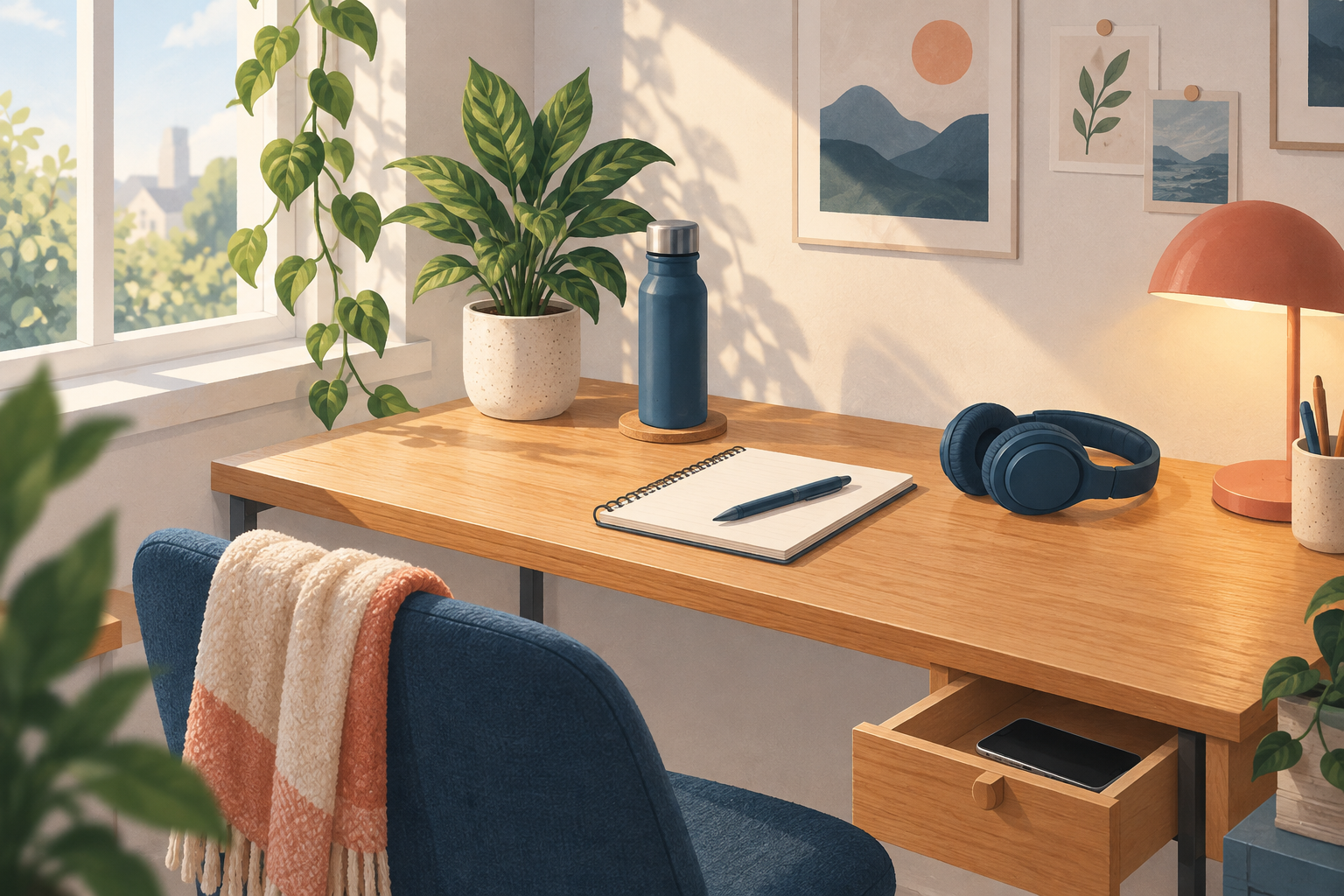
Create a calm study space at home with simple changes to your desk, phone, lighting, noise, and study routine. You do not need an expensive setup.
A distraction-free study space does not need to look like a perfect desk from a video. It only needs to make the next useful action easy and the common distractions slightly harder to reach. For one student, that may be a quiet desk near a window. For another, it may be one corner of a shared bedroom, a library table, or a small foldable desk.
The best study environment supports your routine. It helps you find your materials, start on time, and return to work after a break. This guide covers simple changes you can make without buying expensive furniture or turning your room into a showroom.
What makes a study space distraction-free?
A focused space has a clear purpose. The tools for the current task are easy to reach, while entertainment and unrelated notifications are out of sight. The chair and lighting are comfortable enough that you are not constantly adjusting them.
Distraction-free does not mean silent or empty. Some people work better with low background noise, a clock, or a small plant. The question is whether an item helps the task or keeps asking for your attention. If you keep looking at it, move it away during the session.
Choose one regular place to study
If possible, choose one place that signals study time. A regular spot reduces the number of decisions you make before starting. You learn where your notebook is, where the charger sits, and how to set up the light.
The place does not have to be large. A corner of a table is enough if you can clear it for the session. If you study in different locations, keep a small study kit with a notebook, pens, headphones, and charger so the routine feels familiar.
Try not to use your bed for long study sessions. It can make you sleepy and makes it harder to separate rest from work. If the bed is your only option, sit upright and use a lap desk, but move to another place when you can.
Clear the desk before each session
A messy desk can create tiny interruptions. You may search for a pen, move old cups, or read a worksheet from last week. Spend two minutes clearing everything except the materials for the next task.
Use three simple groups: keep for this session, move away, and throw away or file later. Do not turn tidying into a new form of procrastination. You are preparing the surface, not reorganising your entire room.
Write the first task on a small note. “Revise biology” is vague. “Draw the stages of mitosis and check the labels” tells you how to begin. A clear first action makes the empty desk feel less intimidating.
Control phone and computer distractions
Your phone is not automatically bad, but it is very good at interrupting you. Before a study block, choose a phone rule. Put it in another room, place it in a bag, turn on focus mode, or leave it face down and out of reach. Tell family members when you will check messages again.
On a computer, close extra tabs and use a separate browser window for the task. Keep social media, shopping, and streaming signed out if they pull you away. If you need the internet for research, write the exact question first so you do not drift into unrelated browsing.
Do not rely on willpower alone. Change the space so the distracting option takes a few extra steps. A study timer can mark the end of the block so you do not need to check the clock every few minutes.
Fix the noise and lighting
Noise is easier to manage when you decide what kind of sound works for you. Try quiet, soft instrumental music, a fan, or neutral background sound. Avoid songs with lyrics if you start following the words. If your home is busy, headphones can create a boundary, but keep the volume safe.
Use a light that falls on the page without shining into your eyes. Natural light is pleasant during the day, while a desk lamp helps in the evening. If you feel sleepy, check whether the room is too warm or too dark before blaming your motivation.
Ask the people you live with for a realistic quiet window. A short agreement, such as thirty minutes without interruptions, is easier to follow than asking for silence all evening.
Keep only useful supplies nearby
Keep the things you use every day within reach: pens, paper, your current book, water, and a charger if needed. Store extra stationery in a drawer or box. Too many choices can become visual noise.
A small “parking list” is useful when unrelated thoughts appear. Write down a task, message, or idea and return to the lesson. This reassures your brain that the thought has not been lost without letting it take over the session.
Keep water nearby and choose a simple snack if you need one. Walking to the kitchen every ten minutes can break your focus, but eating a full meal at the desk can create a different problem. Use common sense and notice what makes your own sessions easier.
Make the space comfortable for your body
You do not need an expensive ergonomic chair, but your body should not be fighting the desk. Put both feet on the floor if possible, keep the screen near eye level, and let your shoulders relax. Change position during long sessions instead of trying to sit perfectly still.
Use short breaks to stand, stretch, or look away from the screen. If your back, wrist, or eyes hurt often, tell an adult or health professional and adjust the setup. Discomfort is not proof that you are working hard enough.
Comfort also includes temperature and clothing. A cold room, bright glare, or uncomfortable headphones can become a distraction that looks like poor concentration.
Use a starting and ending routine
A routine gives your brain a clear transition. At the start, clear the desk, open the right materials, write the first task, and set a timer. At the end, mark what you finished, write the next step, and put the main materials together for tomorrow.
Keep the routine short. Two or three minutes is enough. The goal is to reduce friction, not add another checklist that you feel guilty about skipping.
Mood Tracking can help you notice whether certain times, rooms, or noise levels make studying easier. Use the information to adjust the environment instead of assuming every bad session is a character problem.
What to do when you share a room
If you share a room, create a visual study signal. A lamp on, headphones on, or a small note on the desk can tell others that you are in a short focus block. Agree on breaks when you will be available.
Use a portable setup so you can move quickly. A box or backpack can hold your study kit, and a laptop stand or firm book can improve the height of a shared table. If the room is too busy, try a library, school study area, or a quiet corner at another time.
You cannot control every interruption. Plan for a pause: write the last sentence you finished and the next action before you leave. That makes it easier to restart.
Refresh your study space each week
Once a week, remove old papers, charge devices, clean the surface, and check your supplies. Look at what actually caused distractions. Maybe the phone was too close, the lamp was harsh, or you spent ten minutes searching for worksheets.
Make one small change at a time and test it for several sessions. A massive room makeover can feel exciting but may not solve the real problem. Small changes are easier to keep.
Track your study streaks for starting sessions, not for being perfect. Showing up regularly matters more than having a beautiful desk every day.
Frequently asked questions about study spaces
Do I need a separate room to study well?
No. A regular corner, library table, or shared desk can work. Clear the surface, set a simple phone rule, and use a starting routine. Consistency matters more than having a private room.
Where should I keep my phone while studying?
Put it somewhere that makes checking it less automatic. Another room is best for some students. A bag, drawer, or focus mode can work when you need the phone nearby for safety or study.
How can I study when my home is noisy?
Try a predictable sound such as a fan or quiet instrumental music, use safe-volume headphones, and ask for a short quiet window. You can also move study blocks to a library or another time of day.
What should be on a study desk?
Keep the current book, notebook, writing tools, water, and any device you truly need. Move unrelated papers, extra gadgets, and entertainment out of sight until the session ends.
Related AcademyNC tools
Use the Study Planner to decide what the desk is for before you sit down. Start a Study Timer for a clear focus block, use Mood Tracking to notice helpful conditions, and build Study Streaks around showing up regularly.
Final thoughts
A distraction-free study space is built from small decisions: one regular place, a clear surface, fewer notifications, useful light, and a simple start routine. You do not need a perfect room. Make the next session easier to begin, test one change, and keep the setup that helps you return to work.




