
How to Join an Online Study Group (And Actually Stick With One)
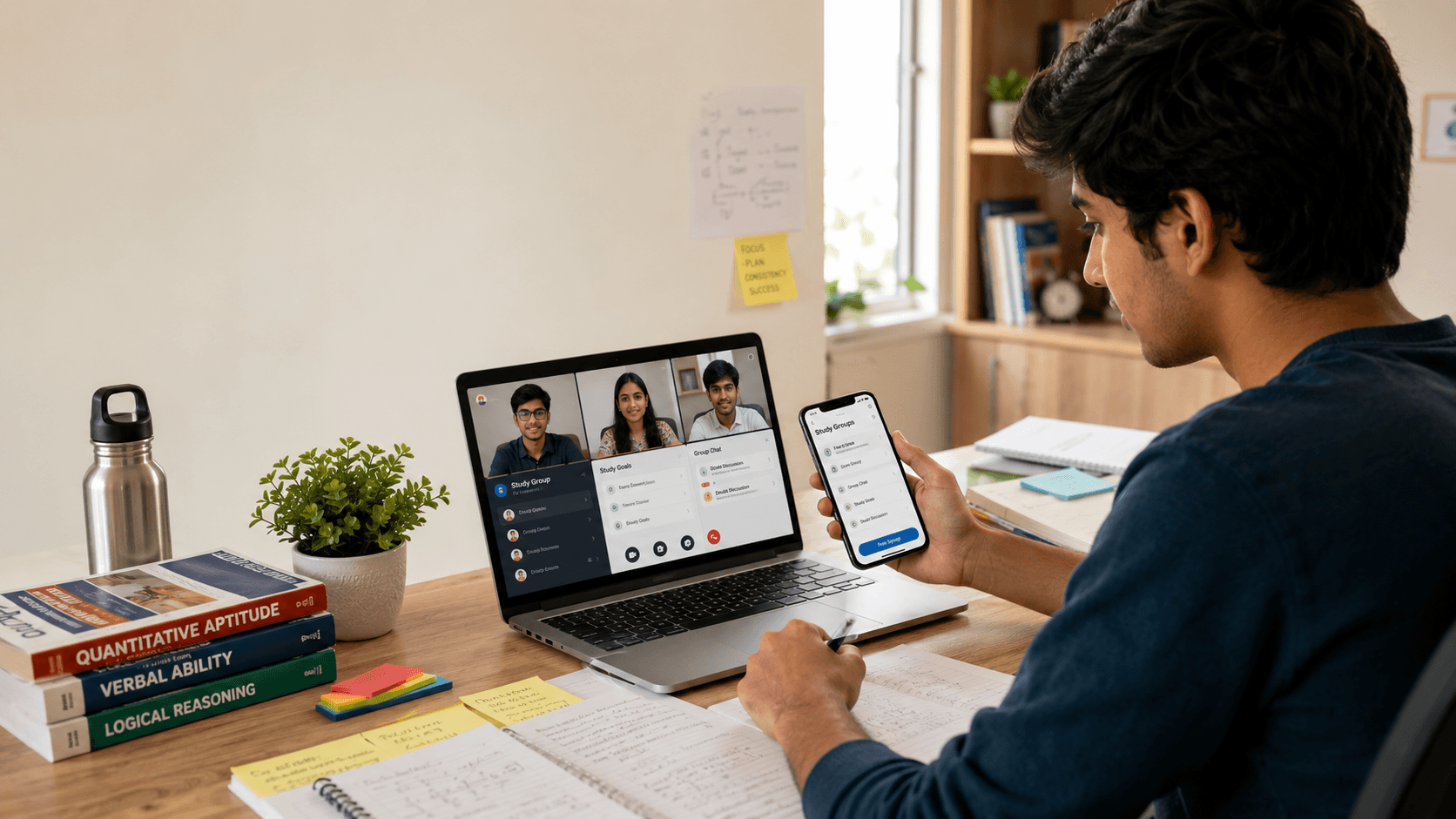
A practical guide to finding an online study group, choosing people with compatible goals, and building sessions that stay focused and useful.
Most students who try an online study group once and give up had the same experience: they joined something that felt promising, sat through one disorganized session, and concluded that group study just wasn't for them.
That's usually not a group study problem. It's a bad group problem.
A well-run online study group is genuinely one of the most useful things you can add to your routine. Not because it replaces the hours you need to put in alone, but because it fixes the two things solo study can't: accountability and doubt resolution. This guide covers how to find the right group, what to look for before you commit, and how to actually use it in a way that helps your grades.
What Is an Online Study Group?
An online study group is a small group of students who study together regularly through an app or platform, without being in the same room. That can mean studying silently side by side on camera, discussing concepts through text or voice, solving problems together, or reviewing mock test results as a group.
The format varies. Some groups are purely silent co-working sessions where everyone studies their own material but the presence of others keeps them on track. Others are active: one person explains a concept, another questions it, and everyone argues it out until it clicks. Both formats work. The right one depends on what you're struggling with.
What they share is a simple thing that solo study doesn't have: other people who notice if you don't show up.
Why Online Study Groups Work (and When They Don't)
The research on this is fairly consistent. Students who study in groups retain material better, ask more questions, and stay more consistent than students who study entirely alone. A 2020 Stanford Teaching Commons report noted that online study groups are especially valuable during periods of remote or asynchronous learning, when the natural social accountability of a classroom disappears.
The mechanism isn't mysterious. When you know three other people are logging in at 7 PM to study Organic Chemistry, skipping feels different than quietly closing your laptop when no one's watching.
That said, online study groups fail regularly. They fail when:
The group is too large and discussion turns into chaos. Three to five people is the right size. Beyond that, coordinating sessions becomes harder than the sessions themselves.
There's no structure. A group that meets and asks "so what should we do today?" every single time will drift into chatting.
The wrong people joined. Someone who's coasting through the material and someone who's three chapters behind need different things. Mismatched groups frustrate everyone.
The group depends on one motivated person to hold it together. That person burns out, and the group disappears.
Good online study groups avoid all four of these. They're small, structured, matched by goal and pace, and distributed in terms of who runs things.
How to Find an Online Study Group
There are a few ways to find one, depending on your situation.
Through a dedicated platform. Apps like online study rooms match you with other students based on what you're studying, your schedule, and your goals. This is the cleanest option because you skip the awkward "does anyone want to study together" phase. The matching does it for you, and the platform has built-in tools like shared Pomodoro timers, virtual study rooms, and daily goal tracking that give the group structure from day one.
Through your course or coaching center. If you're in a college course, post in the class group chat or discussion board. Most students want to study with someone. They just don't ask. If you're at a coaching center for NEET, JEE, UPSC, or any competitive exam, your batchmates are the obvious starting point.
Through communities like Reddit or Discord. Subreddits like r/GetStudying and r/NEET have threads where students look for study partners. Discord has dedicated servers for most competitive exams. These communities are useful for finding people, but you'll usually need to move to a proper platform for the actual sessions.
Cold outreach. If you're in a WhatsApp or Telegram group for your course, message a few people directly. Be specific: "I'm looking for someone to study Physics with on weekday evenings. Would you be up for a shared timer session a few times a week?" Specific asks get responses. "Anyone want to study together?" does not.
What to Look for Before Joining
Before you commit to a group, check a few things.
Similar goal and timeline. If you're preparing for JEE Mains in November and someone else is prepping for JEE Advanced the following year, your urgency is different and your daily targets will conflict. Match on the specific exam and the specific timeline.
Compatible schedule. You can have the best study group in the world, but if sessions keep getting rescheduled because someone has coaching at 6 PM and another person can't do mornings, it falls apart. Agree on a fixed time in the first session and protect it.
Serious attitude. One session is usually enough to tell. If the first meeting involves more catching up on life than studying, that's the group's culture. It won't change.
Small size. Three to five people. If someone is building a "study community" with 20 members, that's a community, not a study group. The accountability drops with every person you add past five.
How to Structure an Online Study Group Session
This is where most groups go wrong. A session without structure becomes a conversation. Here's a format that works:
5 minutes: Goal check-in. Each person states what they're covering in today's session. Specific, not vague. "I'm finishing Integration by Parts and doing 20 practice problems" is useful. "I'm doing Maths" is not.
45 to 90 minutes: Focused study. Everyone studies their own material. If you're using a platform with a shared Pomodoro timer, start it together. No talking during this block except for quick doubt questions.
10 to 15 minutes: Discussion. This is where doubts go, concepts get discussed, and someone explains the thing they figured out that day. Keep it focused on the subject.
5 minutes: End check-in. Did you finish what you planned? What's the target for tomorrow or the next session?
This format is boring in a useful way. It removes the "what do we do today" problem from every session. The structure becomes the habit.
Platforms Worth Considering
There are several platforms for online study groups in 2026. The right one depends on what you need.
AcademyNC is built specifically for students who want real study partners, not just a chat community. It has study partner matching, shared Pomodoro timers, virtual study rooms, leaderboards, and daily goal tracking. It's a good choice if you want the accountability tools built into the platform rather than cobbling together Zoom plus a timer app plus a group chat. Free to start, with an Android app available.
StudyStream runs 24/7 live study rooms based on the Pomodoro technique. Good for silent co-working sessions if you want to study alongside strangers rather than a fixed group.
StudyTogether has a large community of students studying together through Zoom and its own platform. Better for finding people than for structured partner work.
Discord works if you're willing to build your own structure. Find a server for your exam, join a voice channel, use a study timer bot, and treat it like a session. The tools are there, but you have to assemble them yourself.
For most students preparing for competitive exams, a dedicated platform with matching and built-in structure beats a general community every time. You want less setup, not more.
How to Make Your Online Study Group Stick
Finding a group is the easy part. Most groups die within two to three weeks. Here's what keeps them going:
Fix the schedule in the first session and treat it like a class. Not "whenever we're all free." Pick a specific time, specific days, and protect it. Rescheduling every week is the start of the group dying.
Keep the group small. If someone suggests adding more people, the right answer is usually no. Three focused people outperform six distracted ones every time.
Use a shared timer. Studying simultaneously with a synchronized timer is one of the most effective things about a well-structured group. It removes the individual negotiation about when to start. Everyone starts together.
Assign a rotating session lead. Each session, one person is responsible for kicking off the goal check-in and keeping the discussion block on topic. Rotate it every week so no single person carries the burden.
Track progress publicly. Whether it's a leaderboard on AcademyNC or a simple shared Google Sheet, seeing everyone's progress creates a low-pressure accountability system that outlasts individual motivation.
Let people leave without drama. If someone's schedule changes or they find a better group, that's fine. A group held together by social obligation rather than mutual benefit is a group that will collapse messily rather than cleanly.
Common Mistakes to Avoid
Joining multiple groups at once. This feels efficient and produces nothing. Pick one group, go deep with it.
Using session time to learn material for the first time. Study groups work best when everyone has already done the reading or solved the problems and is now discussing what they found hard. If someone consistently comes unprepared and uses the group to learn basics, they slow everyone else down.
Letting the group chat replace the sessions. A WhatsApp thread that shares tips and asks doubts between sessions is fine. But if the actual studying moves into the chat, the structured sessions disappear and the group becomes a group chat.
Treating quiet days as canceled sessions. Some days you're tired. Everyone is. That's exactly when having a fixed session time matters. Show up at the usual time, do 45 minutes even if you're not at your best, and you'll almost always feel better about it at the end.
FAQs
How do I find an online study group for free?
Platforms like AcademyNC, StudyStream, and StudyTogether offer free access to online study groups and virtual rooms. Reddit communities like r/GetStudying and r/NEET also have threads where students look for study partners.
How many people should be in an online study group?
Three to five is ideal. Beyond five, coordinating sessions becomes a task in itself, and the accountability each member feels drops noticeably.
Is an online study group better than studying alone?
For most students, the combination works better than either alone. Solo study is where deep work and problem-solving happen. The group adds accountability, doubt resolution, and the motivation to show up consistently.
How often should an online study group meet?
Three to four times a week is a realistic frequency for competitive exam preparation. Daily sessions work for some groups but lead to burnout for others. The right answer is whatever cadence the group can sustain for months, not weeks.
What app is best for online study groups?
AcademyNC is worth trying first if you want partner matching and built-in structure (shared timers, virtual rooms, goal tracking). StudyStream is good for silent co-working sessions. Discord works if you prefer to build your own setup.
What if my online study group stops being productive?
Name the problem directly. Tell the group the sessions feel unfocused and propose returning to a structured format. If that doesn't work after one or two more sessions, find a new group. Staying in a group out of loyalty when it's not helping you is not a good use of exam preparation time.
Can I join an online study group if I'm a self-study student?
Yes, and you probably need one more than most. Self-study removes the natural accountability of a classroom or coaching batch. A good study group replaces some of that structure.
The Bottom Line
Joining an online study group is not complicated. Finding the right one takes a bit more effort, but the search is worth it. A group of two or three serious students who show up consistently, study with a timer, and discuss what they don't understand is one of the most reliable ways to maintain consistency over a long preparation period.
The students who struggle with group study usually had one bad experience with a disorganized group and wrote off the format entirely. Don't do that. Find a smaller, more structured group, try it for two weeks, and see what the sessions do to your consistency.
If you want to start today, AcademyNC matches you with students based on your goals and schedule, with study rooms and shared timers ready from your first session.




