
How to Prepare for an Open-Book Exam
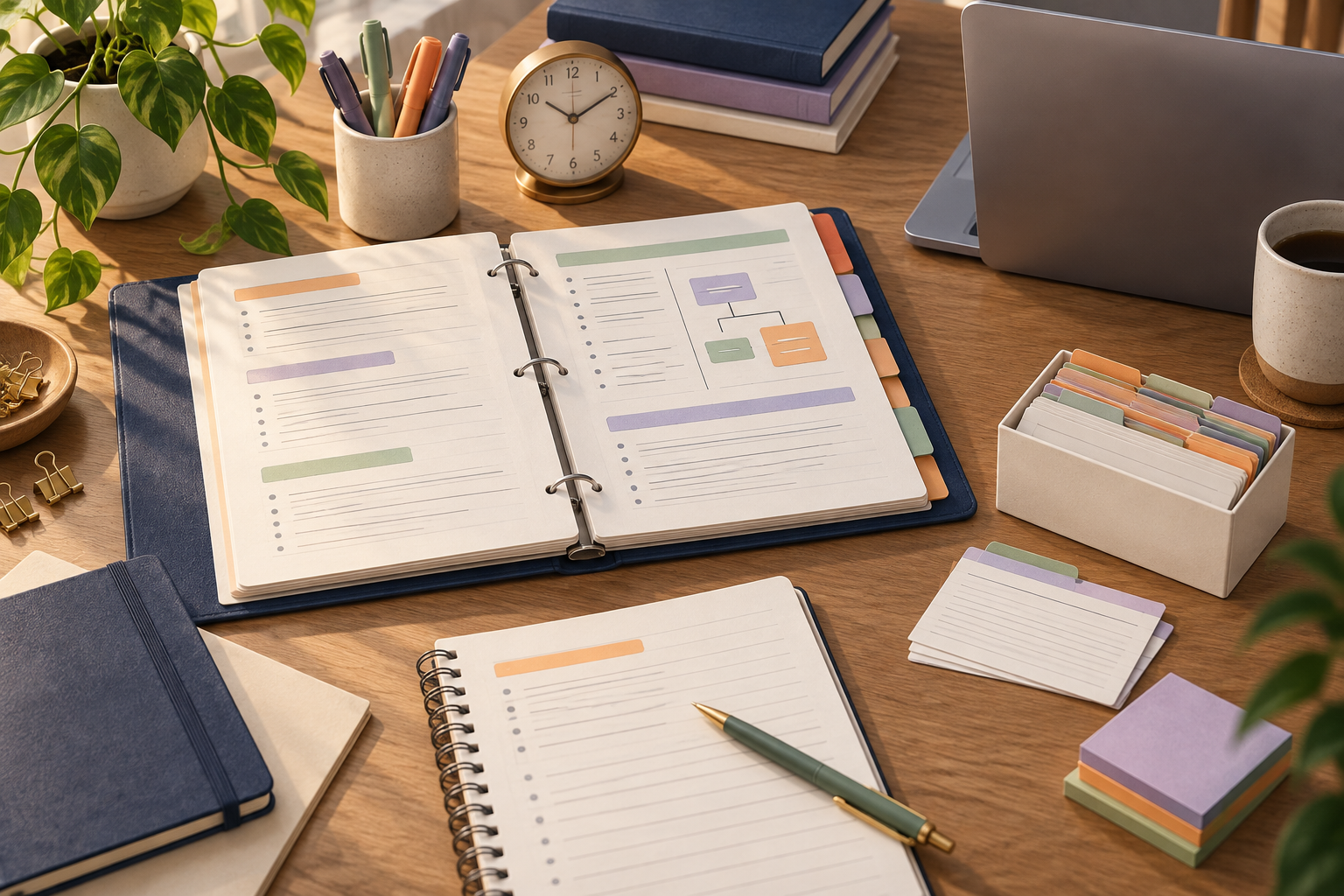
Learn how to prepare for an open-book exam by studying the content, organising notes for fast access, practising timed answers, and avoiding common traps.
An open-book exam can sound easy because you are allowed to use notes, a textbook, or approved resources. In practice, the exam may give you less time and more complex questions because it expects you to understand the material. Searching every page for every answer can quickly use up your time. The best preparation is a balance of learning the ideas, organising your resources, and practising how to use them. This guide explains how to prepare for an open-book exam without depending on the book to do the thinking for you.
Why open-book exams still need revision
An open book does not remove the need for memory. You still need to understand the topic well enough to recognise what a question is asking and decide which information matters. If you have to learn the whole chapter during the exam, you will run out of time before writing a complete answer.
Open-book questions often ask you to apply, compare, explain, or evaluate. The resource may contain useful facts, but it cannot choose the best evidence or build the argument for you. Revision helps you move from finding information to using it.
Think of your notes as a map, not a replacement for learning. You should know the main ideas before you enter the exam and use the book to confirm details, find a quotation, check a definition, or support a more difficult point.
Read the rules before you plan
Check exactly what you are allowed to bring or open. Some exams allow one page of notes. Others allow a textbook, printed materials, or specific digital resources. The rules may limit internet access, collaboration, annotations, or the use of devices.
Write the rules at the top of your preparation sheet. If the exam has a time limit, number of questions, or required format, include that too. You do not want to build a perfect note system that cannot be used on the day.
Ask your teacher or exam organiser about anything unclear. A small rule difference can change how you prepare. Use official instructions rather than assumptions from a different class or an online post.
Learn the material before exam day
Start revision as if the exam were closed book. Make a topic list, rate your confidence, and practise explaining the main ideas without looking. This shows where your understanding is weak.
Once you know the structure, use the book to fill gaps. Mark pages, create short summaries, or add references to important sections. Do not copy whole chapters into your notes. Long notes are slow to search and difficult to use under pressure.
For each topic, write the key idea, important terms, useful examples, and questions it could help answer. Then close the source and explain the topic in your own words. This active step is what makes the resource useful later.
Build a fast reference system
Organise your resources so you can find an item in seconds rather than minutes. Use clear section headings, page numbers, colour tabs, or a simple contents page. Keep the system consistent across topics.
Create an index with the term, topic, and page or file location. Add common synonyms because an exam question may use different wording from your notes. For digital resources, use folders and filenames that describe the topic rather than vague names such as “notes final.”
Test the system before the exam. Choose a random question and time how long it takes to locate the relevant information. If the search is slow, simplify the structure.
Organise notes around questions
Notes are easier to use when they answer likely questions. Instead of one long page called “Chapter 4,” create sections such as definition, causes, evidence, comparison, examples, limitations, and conclusion.
Write short answer starters that remind you of the logic without writing a complete essay. For example, record the main claim, two supporting points, one limitation, and a possible judgement. Keep the wording in your own voice so you do not simply copy without thinking.
Add a list of terms that are easy to confuse. Include the difference between them and an example. This can save time when a question tests a small distinction.
Practise finding evidence
Take practice questions and locate the best evidence in your materials. Do not begin by reading every page. Read the question first, identify the task and keywords, then search for the section that can support the answer.
Write down the page or file location of useful evidence. Ask whether it actually answers the question or only relates to the topic. A fact that is true but irrelevant still wastes time.
Practise finding both supporting and opposing evidence. Evaluation and comparison questions often need balance. Your reference system should help you see the limitation as quickly as the first argument.
Use the book without losing time
Set a time limit for searching during practice. If you cannot find the answer quickly, write what you know and return to the resource later. Do not let one difficult search take the time needed for several easier questions.
Use the resource to check accuracy, not to avoid making a decision. First explain the answer from memory, then look for a detail that improves it. This prevents you from staring at the page while waiting for an answer to appear.
Keep only permitted resources on your desk. Extra tabs, messages, and unrelated files create distractions and can make it harder to follow the rules.
Write answers in your own reasoning
An open-book answer still needs a clear argument. Start by answering the question, then support the point with relevant evidence, explain the connection, and add a limitation or comparison when needed.
Use notes for accuracy and support, but do not paste large blocks of text. Copying can make the answer less clear and may fail to address the exact wording. Read the source, close it if possible, and explain the idea in your own words.
For longer answers, use a short plan before writing. List the main point, evidence, explanation, and conclusion. This is faster than writing the first detail you find and discovering later that your answer has no direction.
Manage time and distractions
Before the exam, divide the available time between reading instructions, planning, answering, and checking. Leave a small buffer. If the paper has questions with different marks, give more time to the questions that require more work.
Use a study timer for practice. Complete one timed section with only the permitted resources. Notice how long you spend searching, planning, writing, and checking. Adjust your system based on what actually happens.
During the exam, keep moving. Mark a question if you need to find a detail and continue with one you can answer. A calm, organised process protects your marks better than frantic searching.
Review common mistakes
Many students prepare notes but never practise using them. Others bring too much information and cannot find the important part. Some students assume every answer is in the resource and fail to learn the basic ideas.
Another mistake is ignoring citations, page references, or the required answer style. If your course expects evidence or a particular structure, practise it before exam day.
Review your practice answers for relevance. Did you answer the question asked? Did you use the resource to support a point? Did you spend too long looking for a small detail? Your next revision session should fix the pattern you see.
Prepare your exam desk
Test your approved materials one more time. Check that tabs are readable, files open, links work if they are allowed, and notes are arranged in the order you expect to use them.
Prepare a short list of key topics and common terms for the last review. Do not build a completely new note system the night before. Sleep and a clear mind are more useful than another stack of pages.
On the day, read the instructions before opening resources. Confirm what is allowed, note the question structure, and start with a plan. Treat the book as a tool you can use, not a place to hide while the clock moves.
Frequently asked questions about open-book exams
Is an open-book exam easier?
It can reduce the need to memorise every small detail, but it often tests deeper understanding and application. The difficulty depends on the questions, rules, time limit, and subject. Prepare seriously and use the book to support thinking rather than replace it.
What should my notes include?
Include key definitions, topic summaries, examples, comparisons, evidence, page references, and common mistakes. Keep them short and organised. Add prompts that remind you how to build an answer instead of copying long paragraphs.
Should I use digital notes or paper notes?
Use the format allowed by the exam and the one you can search quickly. Paper can be easy to scan with tabs, while digital notes can be fast when search is permitted. Test your method under timed conditions before deciding.
Related AcademyNC tools
A study planner can schedule open-book preparation, note organisation, and timed practice. A study timer can help you practise searching without losing control of the clock. An AI practice quiz can test whether you understand the content before opening your notes. The study time tracker can show whether you are spending enough time learning rather than only organising resources.
Final thoughts
The best open-book exam strategy is to prepare as if the core ideas must come from you. Learn the material, organise resources with a simple index, practise finding evidence, and write answers in your own reasoning. Use the book to check and support your thinking, not to begin learning every topic during the exam. With a tested system and realistic practice, an open-book paper becomes a manageable task instead of a race through unfamiliar pages.




