
Study Mood and Energy Tracking: Find Your Best Study Time
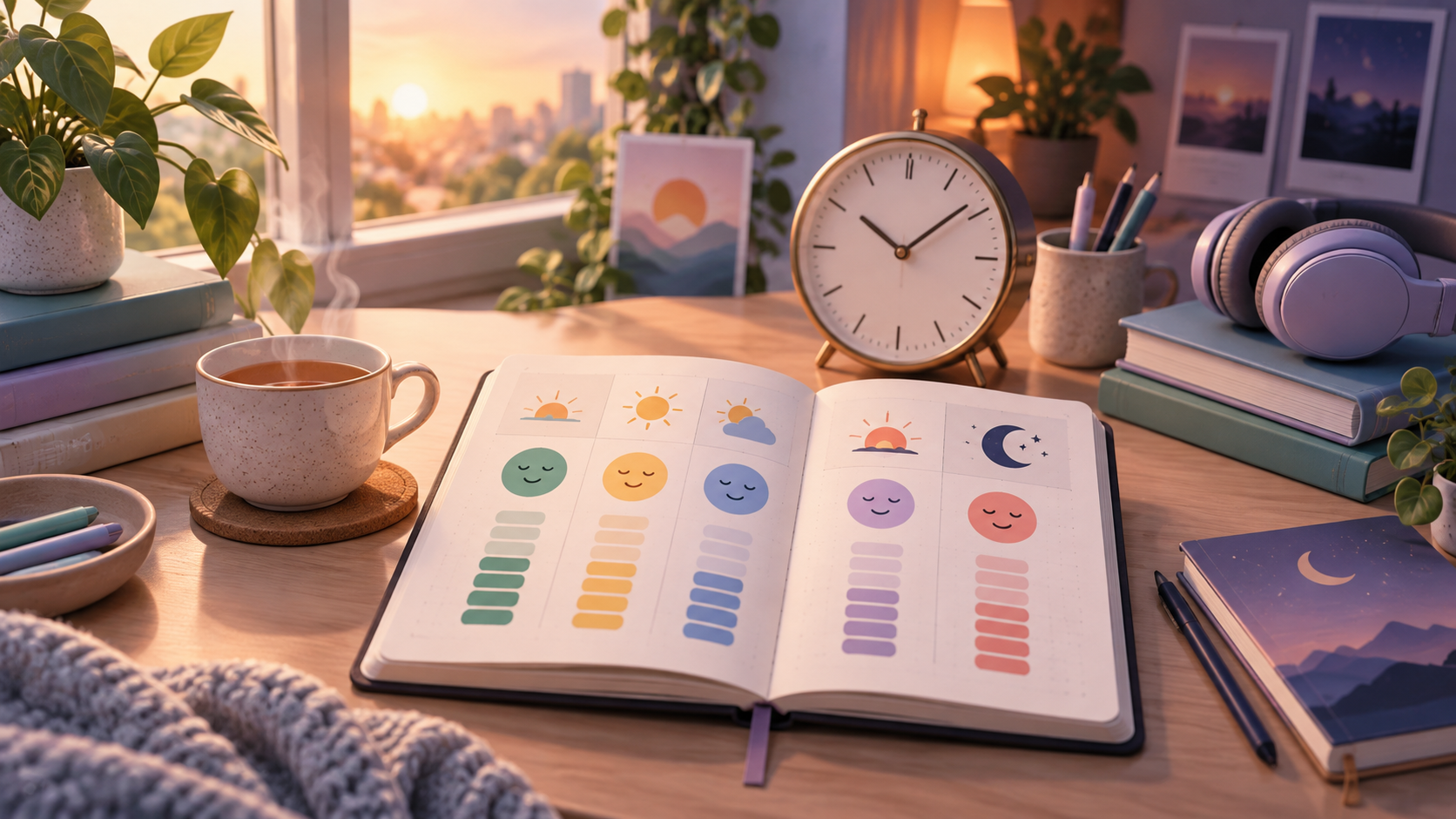
Your best study time is not the same every day. Tracking mood, energy, and focus beside your study sessions can help you notice patterns and plan difficult work when you are most ready for it.
Some days you sit down to study and everything feels easy. On other days, the same subject feels much harder. Your mood, sleep, energy, stress, and surroundings can change how much focus you have. That does not mean you are lazy or bad at studying. It means you are a person with changing energy.
A study mood tracker can help you notice these changes without turning them into a judgement. By recording a few simple details beside your study sessions, you may learn when you focus best, which tasks fit a low-energy day, and what habits make studying feel easier. The goal is not to measure your feelings perfectly. The goal is to collect useful clues and make a more realistic study plan.
What Is Study Mood Tracking?
Study mood tracking means making a short check-in before or after a study session. You record how you feel, how much energy you have, how focused you were, and what you worked on. You can use numbers, words, or both. For example, you might give your energy a score from one to five and write “a little tired but calm.”
Over time, these check-ins create a simple record of your study habits. You may see that you solve difficult maths questions more easily in the morning, remember vocabulary after a good night of sleep, or lose focus when you try to study for too long without a break. A mood tracker for students is not a medical test and cannot explain every feeling. It is simply a way to observe your own routine.
Why Energy Matters When You Study
Focus is not only about willpower. Your brain needs rest, food, water, movement, and enough time away from screens. Stress can make it harder to start. Poor sleep can make a familiar topic seem confusing. Even the time of day can affect how alert you feel.
When you ignore energy, you may plan your hardest task for a time when you usually feel tired. Then you might blame yourself when the session goes badly. Energy tracking gives you a chance to plan with better information. You can put problem-solving, writing, or exam practice in a high-energy block and use a lower-energy block for review, organising notes, or easy flashcards.
What Should You Record?
Keep the check-in small enough that you will actually use it. You do not need to record every detail of your life. Start with these fields:
• Mood: calm, worried, bored, motivated, frustrated, or another word that fits.
• Energy: a score from one to five, where one is very low and five is high.
• Focus: a score from one to five, based on how easily you stayed with the task.
• Sleep and context: optional notes such as poor sleep, a busy day, a noisy room, or a meal break.
• Subject and task: the class, topic, and type of work.
• Time and length: when you started and how many minutes you studied.
• Result: what you finished, remembered, or still need to practise.
Do not worry about choosing the perfect label. The same short scale each day is more useful than a detailed system you stop using.
Keep Your Daily Check-In Simple
A good study mood tracking routine can take less than one minute. Before you start, write your mood, energy, and intended task. After the session, give focus a score and write one sentence about what happened. You could record “energy 3, focus 4, chemistry review, finished ten questions” or “energy 2, focus 2, kept checking my phone.”
Try to record the check-in at roughly the same points in your routine. If you measure before a session one day and after a session the next, the numbers are harder to compare. Do not use the check-in to delay your work. If you are ready to study, start first and record the details quickly.
Find Your Best Time for Difficult Work
After one or two weeks, look for repeated patterns. Which time blocks have your highest energy and focus scores? Which subjects did you handle well at those times? Do you often feel slow after lunch, or do you become more alert in the evening? Is your focus better at home, in a library, or during a quiet online study session?
You are looking for a useful pattern, not a perfect rule. If mornings are usually strong, schedule difficult problem-solving or essay planning there when possible. If evenings are better for you, protect that time for focused work. Your best time of day to study may also change during exams, holidays, or busy weeks, so keep checking instead of treating one result as permanent.
Match Tasks to Your Energy
Not every study task needs the same kind of attention. Matching the task to your energy can help you make progress even on an ordinary or tiring day.
When energy is high, try new topics, timed practice tests, difficult maths, essay writing, or work that requires several steps. When energy is medium, review class notes, answer flashcards, practise familiar questions, or finish an assignment that is already planned. When energy is low, organise your desk, read a short summary, label notes, watch an assigned lesson, or make a list of questions to ask later.
A low-energy study routine should still have a clear finish line. Choose one small task, set a short timer, and stop when the planned block ends. If you are too tired to understand the material, rest and return at a better time. Pushing through every session is not a sign of discipline if nothing is being learned.
Use Study Mood Analytics After Two or Three Weeks
A few days can be unusual, so avoid making big decisions from one bad session. After two or three weeks, review your check-ins. Calculate simple averages if that helps: average energy by time of day, average focus by subject, or average focus after different sleep patterns. You can also just count how often a pattern appears.
Ask practical questions. When is my focus usually highest? Which tasks feel difficult even when my energy is good? Do short breaks help? Does studying for 25 minutes work better than studying for 60 minutes? Which distractions show up most often? The answers can guide your next schedule.
You do not need complex study habit analytics. A small table or weekly note is enough. The value comes from making a change and then observing whether it helps. For example, try moving vocabulary review to a low-energy time and difficult practice to a high-energy time. Review the results the following week.
Do Not Confuse Patterns With Causes
If you focus better on days when you sleep longer, that is a useful observation. It does not prove that sleep is the only reason. A quieter day, lower stress, or easier homework may also be part of the pattern. Think of your notes as clues, not a scientific diagnosis.
Mood and energy scores can also be affected by stress, health, family responsibilities, or events outside school. If you often feel very low, overwhelmed, or unable to manage daily life, speak with a trusted adult, school counsellor, or qualified professional. A study tracker cannot replace support. It should be used gently and privately.
Protect Your Privacy
Your check-ins may include personal information. Keep them in an account or notebook you trust, and do not share private details in a public study group. If you use a digital app, review what information it stores and remove anything you do not need. You can track general words such as “tired” or “calm” without writing a detailed personal story.
The aim is to help you make better choices, not to create another source of pressure. If recording your mood makes you more anxious, simplify the system or stop. Your well-being matters more than perfect data.
A Low-Energy Study Routine
Try this plan when your energy is low but you still want to make a little progress. First, drink water, move for two minutes, and clear only the materials you need. Next, choose one task that can be finished in 15 to 25 minutes. Set a study timer and work with your phone out of reach. When the timer ends, write down what you completed and the first step for your next session.
Choose tasks that do not require you to learn a large new idea from scratch. Review five flashcards, correct two practice questions, outline one paragraph, or organise tomorrow’s materials. If you notice that your mind is not taking in the information, take a longer break or sleep. A short useful session is better than a long session filled with frustration.
Plan Around Patterns, Not Perfect Days
A study schedule should give you direction while leaving room for real life. Use your usual high-energy times for important work, but keep a backup plan for days when your mood or energy changes. You can split a two-hour block into smaller sessions and adjust the task when needed.
At the end of each week, choose one thing to keep and one thing to change. You might keep morning revision and change your phone rules. You might keep short timed blocks and move difficult reading to a quieter place. Small changes are easier to test than a complete new routine.
Remember that a low score in your tracker is not a personal failure. It is a signal to check your workload, rest, environment, or study method. A high score is not a demand to work even harder. Let the information help you build a routine that is steady enough to continue.
Study Mood Tracker FAQs
What is a study mood tracker?
It is a simple record of your mood, energy, focus, subject, and study session details. Reviewing the record can help you notice patterns in your routine and choose better times for different tasks.
How often should I track my study mood?
A quick check-in before and after a study session is enough. You can track daily for two or three weeks, then review the pattern once a week. Keep it simple so it does not become another task to avoid.
What is the best time of day to study?
There is no single best time for everyone. Your own energy and focus records can show whether mornings, afternoons, or evenings usually work better for difficult work.
What should I do if my energy is low?
Choose one small task, use a short timer, remove one distraction, and stop if you are too tired to learn. Review or organise materials when possible, and schedule harder work for a time when you are more alert.
Can mood tracking improve study performance?
It can help you spot habits and plan more realistically, but it cannot guarantee better marks. Combine the information with good study methods, enough rest, feedback, and support from teachers or family.
Is mood tracking a mental health diagnosis?
No. A student mood tracker is a personal study habit record, not a medical tool. If you are worried about your mood or daily functioning, speak with a trusted adult or qualified professional.
Final Thoughts
A study mood tracker helps you study with more self-awareness. Record only a few useful details, review them after two or three weeks, and use the patterns to match hard tasks with high-energy times. Keep a smaller plan for low-energy days, protect your privacy, and remember that the numbers are clues rather than judgements. A kind, flexible routine is more useful than a perfect schedule that does not fit your life.




